
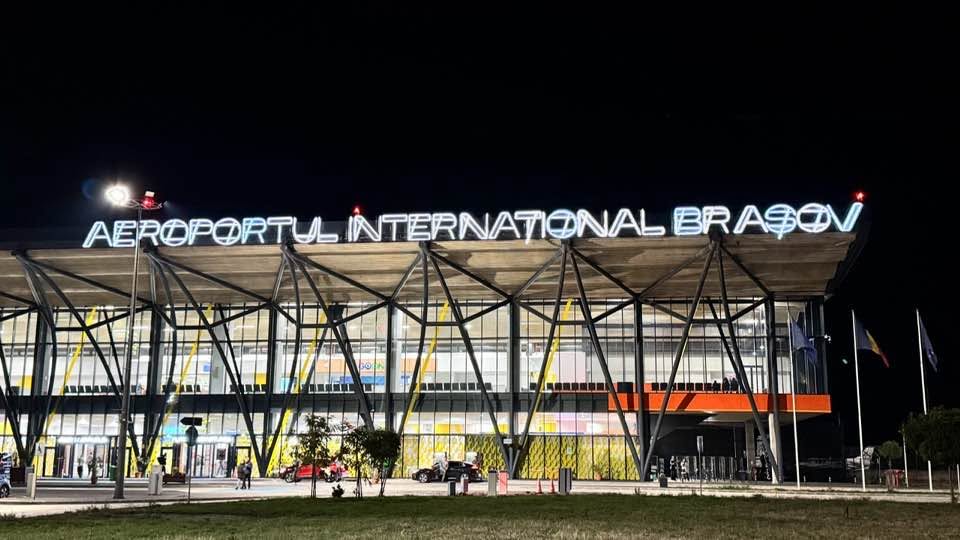
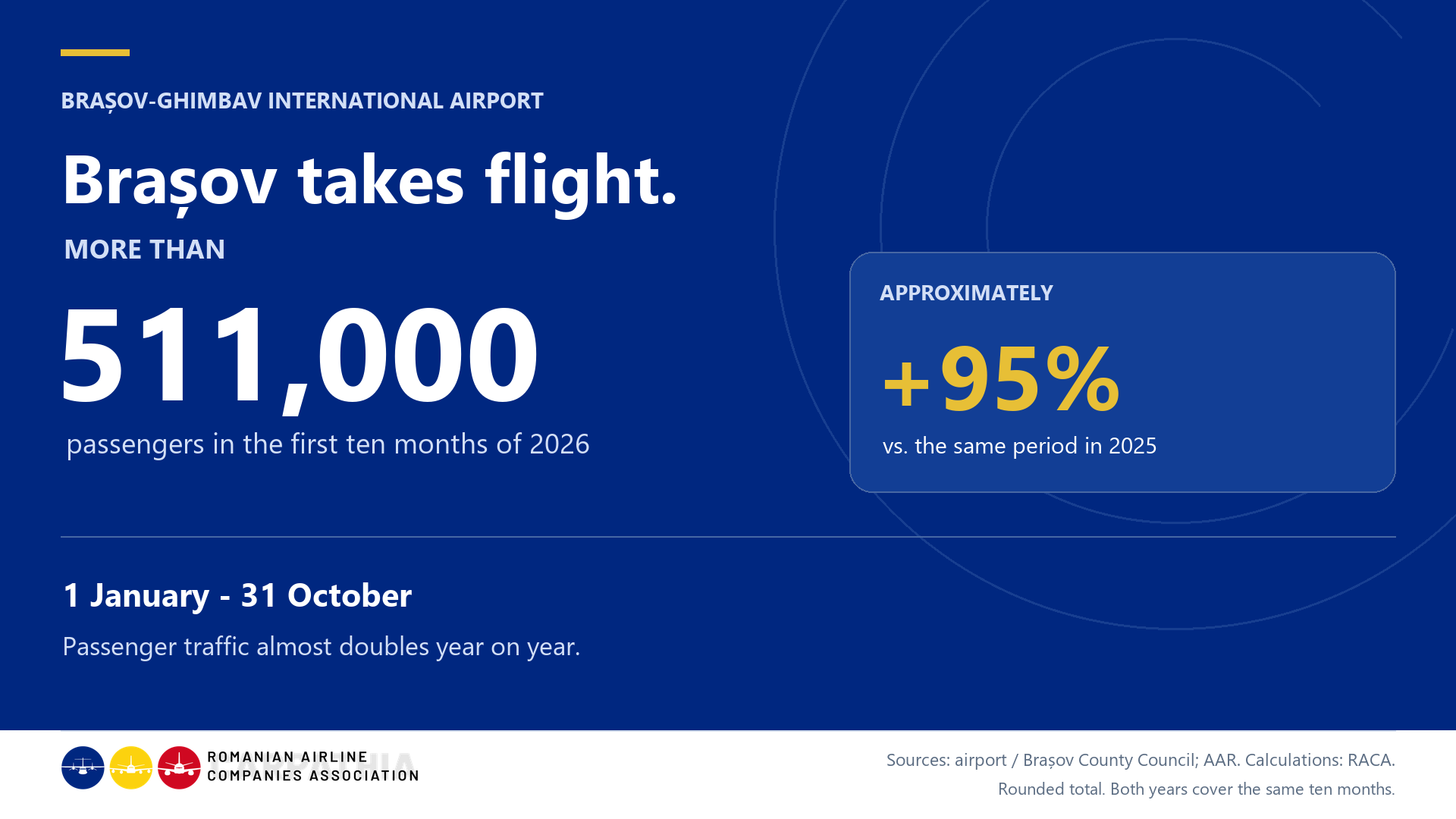
Brașov-Ghimbav International Airport, a partner member of the Romanian Airline Companies Association (RACA), recorded more than 511,000 passengers in the first ten months of 2026. This is almost twice the figure for the same period in 2025, an increase of approximately 95%. For an airport that began operating in 2023, the result shows how quickly a new gateway to Romania can establish its relevance.
Beyond the figures, this growth means more travel options for people in central Romania and more direct access for visitors travelling for holidays, business or family reunions. Brașov is steadily building its place within Romania's airport network.
Located in Ghimbav, approximately 12 kilometres from Brașov, the airport has been operational since 15 June 2023 and has a runway measuring 2,820 metres in length and 45 metres in width. Its infrastructure includes remote air traffic control tower technology, used for the first time in Romania. Passengers have access to public parking in front of the terminal, car rental services and dedicated assistance for people with reduced mobility. Developing these services and improving ground access matters for the entire journey.
A strong summer, followed by autumn growth
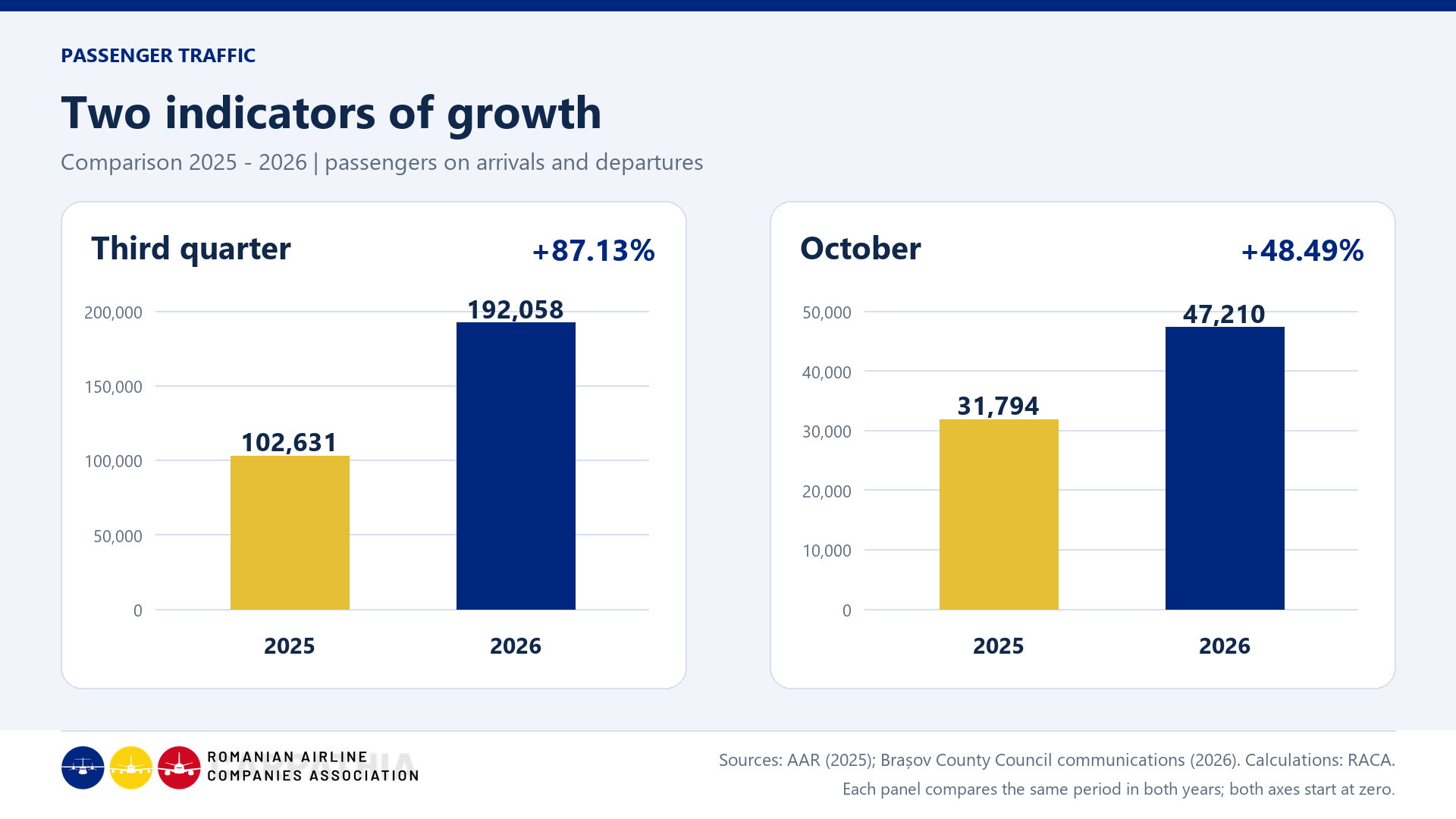
In the third quarter of 2026, the airport recorded 192,058 passengers, compared with 102,631 in the same quarter of 2025. This represents growth of 87.13%. August set a monthly record of 69,689 passengers, according to the figures released by the county administration and shared by the airport's management.
Growth continued beyond the summer season. In October 2026, the airport recorded 47,210 passengers, compared with 31,794 in October 2025. The additional 15,416 passengers represent an increase of 48.49%. These comparisons show tangible results from the airport's development both during summer and into autumn.
The next step: an operating base and new destinations
The expanding route network is opening a new chapter for Brașov. The Valencia service was launched in early November, while four new destinations have been announced for December: Madrid, Barcelona, Chișinău and Karlsruhe/Baden-Baden.
An operating base has also been announced for December, with one Airbus A321neo allocated to the airport. A base represents a broader operational commitment, with an aircraft and crews based locally, and can support the development of the flight programme. Its impact on traffic can be assessed once operations begin.
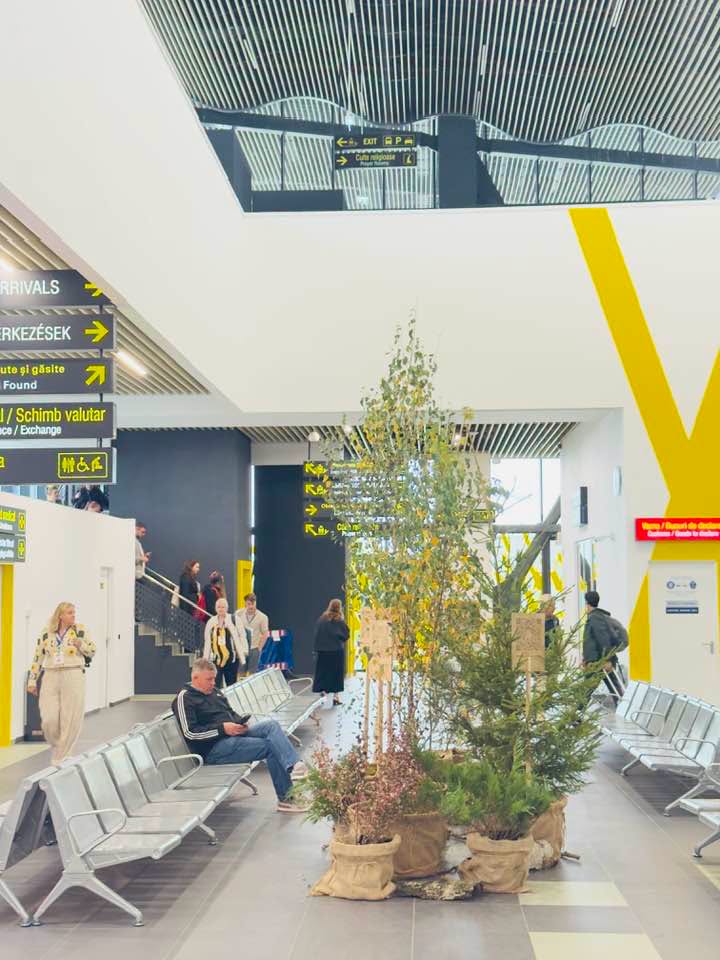
The terminal interior, in an image published on the airport's official page.
In the next phase, attracting a wider range of airlines and a future service to a major connecting airport could broaden passengers' options. This is a development opportunity worth pursuing alongside the consolidation of existing direct routes.
An airport that can benefit the wider region
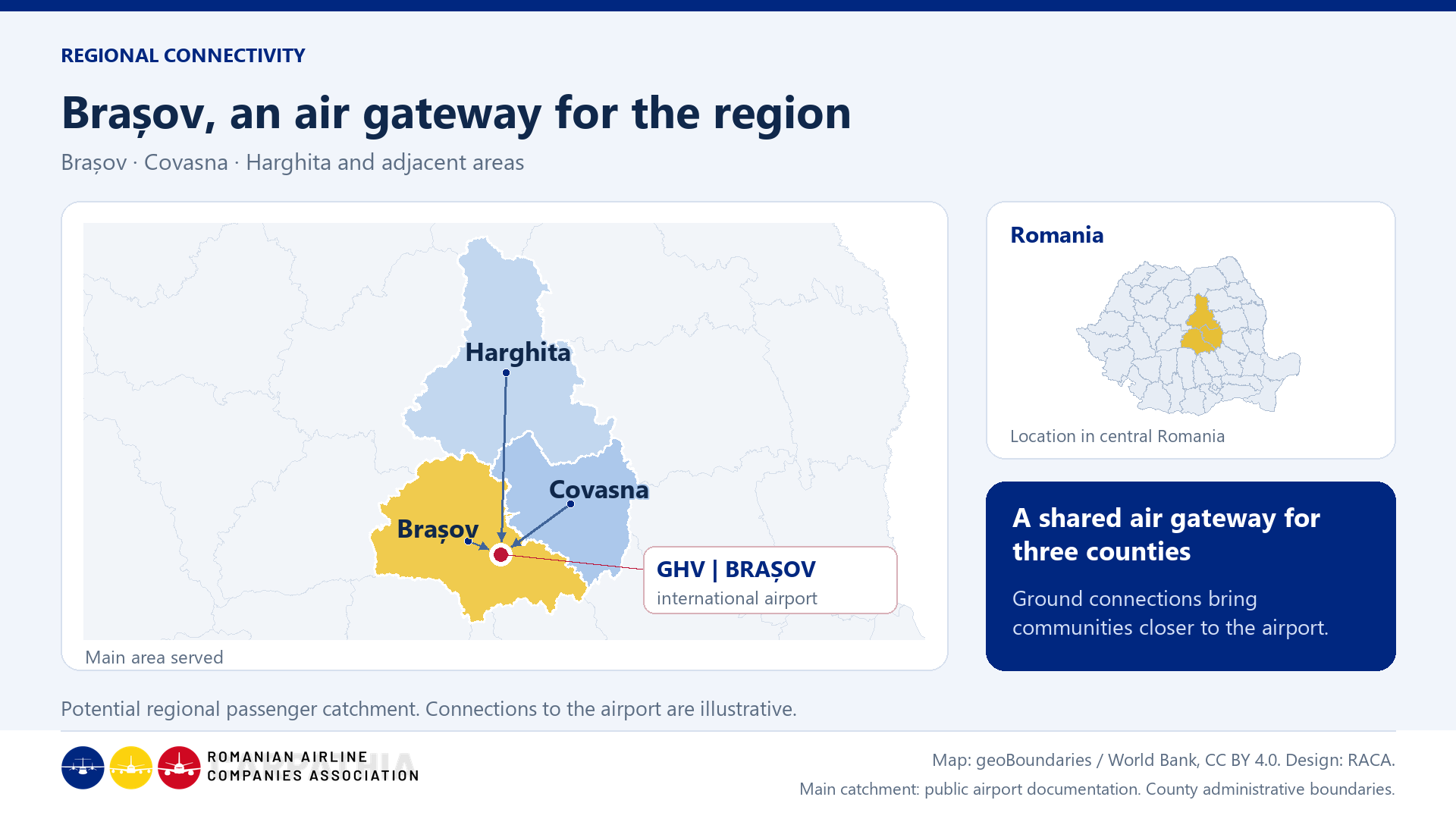
Brașov, Covasna and Harghita are the main counties the airport aims to serve, together with adjacent areas, according to its public documentation. For residents of these counties, a broader range of flights can provide more opportunities to depart closer to home. Direct connections support family travel, links with the diaspora and professional mobility.
For tourism, the airport can be the starting point for a journey through Brașov, Poiana Brașov, Bran, Râșnov or the resorts of Covasna. For businesses, it can facilitate visits by partners, participation in events and access to international markets. These opportunities can be realised through cooperation between the airport, airlines, public authorities, destination management organisations and the private sector.
Transfers to cities and tourism destinations, clear information for travellers and flight schedules suited to demand are equally important. Regional connectivity extends all the way to the passenger's final destination.
Travel needs span holidays and stays in the region, business trips and visits to family or friends. New destinations can meet these needs in both directions, serving people departing from central Romania and those choosing to visit. Route development needs to reflect this demand and ground access from the counties served by the airport.
Results that deserve recognition and continued support
RACA congratulates General Director Daniel Micu and the team at Brașov-Ghimbav International Airport on their results and their efforts to improve connectivity. Growing passenger traffic and securing an operating base are important milestones for an airport still in its early years of operation.

Daniel Micu in the terminal during an institutional visit. Image source: the airport's official page.
These results build on the airport team's work, investment supported by Brașov County Council and cooperation with airlines and institutional partners. Sustaining this effort is essential for the next phase of development.
RACA supports a predictable framework for aviation, sound investment decisions and dialogue between airports, airlines and public authorities. Viable routes, good services and convenient airport access can turn today's growth into lasting benefits for the region.
Brașov has reasons to look ahead with confidence. RACA supports the airport's development as a gateway to central Romania, serving passengers, communities and the regional economy.
(Traffic data: public communications by the airport administration and Brașov County Council, and AAR statistics. Calculations and graphics: RACA. Traffic counts passengers on arrivals and departures and does not represent unique individuals.)