
Romanian aviation needs strong international relationships and a credible voice in the discussions shaping its future. RACA chooses to build these relationships directly, learn from the best and bring to Romania the experience of organisations representing the industry at European and global levels. In keeping with this approach, a RACA delegation attended Airlines 2026 in London on 11 November 2026.
Organised in Westminster by Airlines UK, the International Air Transport Association (IATA), the Board of Airline Representatives in the UK (BAR UK) and FlightGlobal, the conference brought together airline leaders, representatives of airports, authorities and professional organisations, as well as experts and specialist journalists. The discussions explored the relationship between air transport competitiveness, economic development, infrastructure and the transition to sustainable aviation.
Our presence at the 2026 edition builds on the association’s participation in Airlines 2024 and strengthens the professional relationships developed in this international setting. For Romanian airlines, many of the challenges discussed in London are familiar: cost pressures, regulatory predictability, access to infrastructure and financing the environmental transition.
Direct dialogue with associations, authorities and the international media
During the event, the Romanian delegation held discussions with representatives of IATA, Airlines for Europe (A4E), Airlines for America (A4A), the UK Civil Aviation Authority, FlightGlobal, Air Cargo News, Bloomberg News, SimpliFlying and OneReg, among others.
The range of these contacts is important for Romania. Exchanges with professional organisations provide opportunities to share experience in representing airlines and engaging with authorities. Interaction with specialists and representatives of regulatory bodies helps build an understanding of different approaches, while relationships with the international media create opportunities to raise the profile of Romanian aviation.
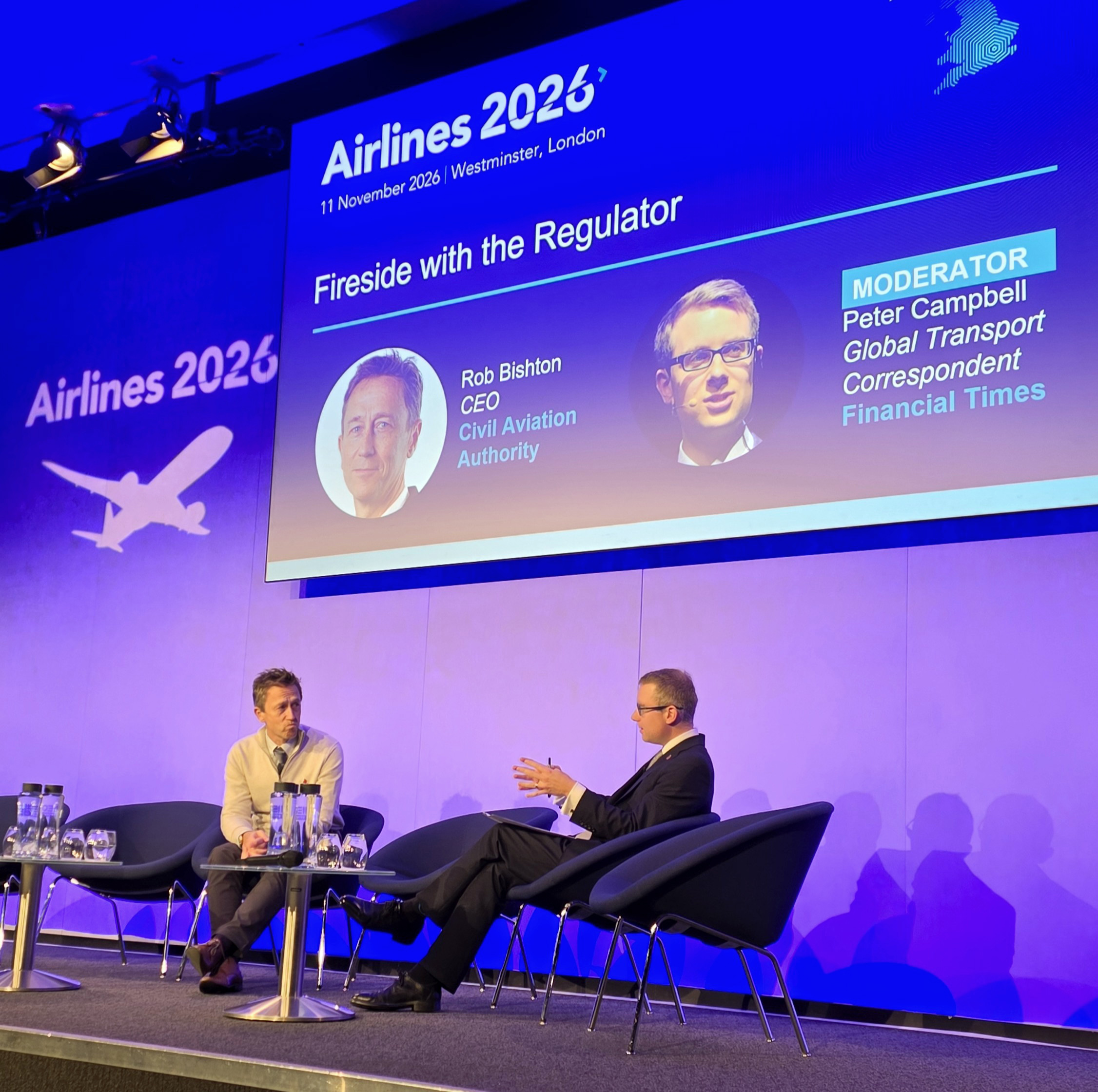
The session with Rob Bishton, UK Civil Aviation Authority, at Airlines 2026.
The openness and warm welcome RACA received in London encouraged these professional exchanges. For an association that is still developing, access to the experience of established organisations and influential industry contacts has practical value: it helps build stronger arguments, understand the international context and establish long-term working relationships.
There were also practical discussions with Shashank Nigam, founder and CEO of SimpliFlying, an aviation strategy company that has worked with more than 120 industry clients across six continents. The author of SOAR, co-author of Sustainability in the Air and co-host of the SoarAI podcast, Nigam works at the intersection of airline strategy, passenger experience and new technologies. At Airlines 2026, he joined Kevin O’Sullivan, Director of Engineering at SITA, for the session on the future of travel with artificial intelligence.
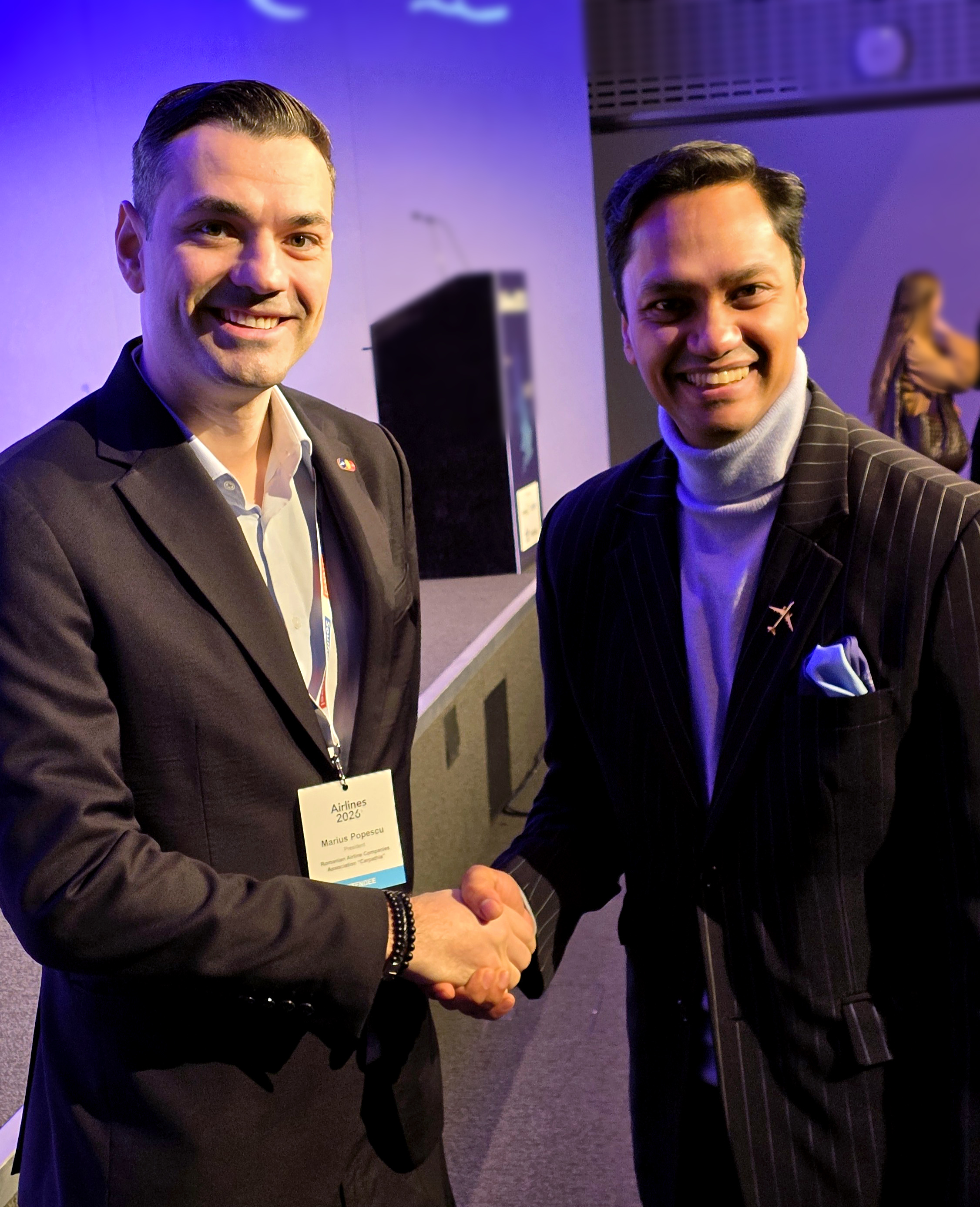
Shashank Nigam, founder and CEO of SimpliFlying, at Airlines 2026.
A4E and A4A on competitiveness and investment
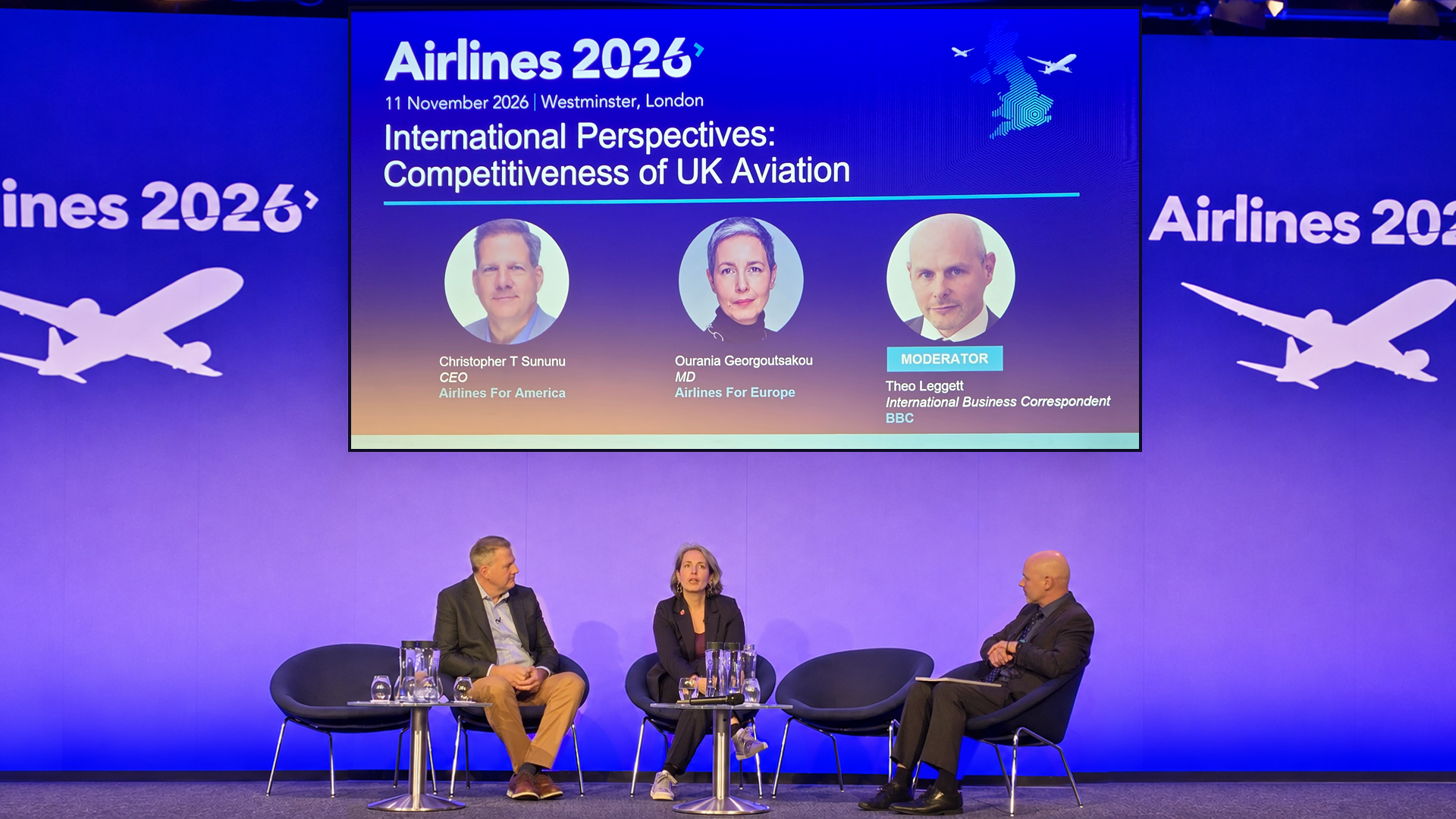
Ourania Georgoutsakou, Managing Director of Airlines for Europe, and Christopher T. Sununu, CEO of Airlines for America, examined the conditions that attract airline investment in a discussion moderated by Theo Leggett, the BBC’s International Business Correspondent.
Ourania Georgoutsakou linked a destination’s attractiveness to the total cost of travel, infrastructure and border crossings. According to the figures she presented, the UK’s air connectivity was approximately 10% below pre-pandemic levels, with direct connectivity down 7%. Taxes and charges need to be assessed together, since passengers and airlines can choose other markets.
Christopher T. Sununu illustrated this competition through direct flights between the US and Edinburgh and the advantages of regional airports: costs, access and time saved. He also outlined A4A’s efforts to secure a further $30 billion to modernise US aviation infrastructure, following the initial $12.5 billion in funding for air traffic control.
Ourania also highlighted differences in exposure to sustainability regulations: in her comparison, 67% of IAG’s capacity, measured in available seat kilometres (ASK), was subject to these rules, compared with 10% for Delta. Her argument was that such differences affect airline competitiveness, hub choice and the location of investment.
Beyond the stage, the RACA delegation held practical discussions with representatives of A4E and A4A. The exchange of ideas with Ourania Georgoutsakou highlighted numerous shared positions between RACA and A4E, and this dialogue is set to deepen. This convergence provides a basis for coordinating advocacy efforts and representing the industry’s interests more effectively to decision-makers, particularly in Europe.
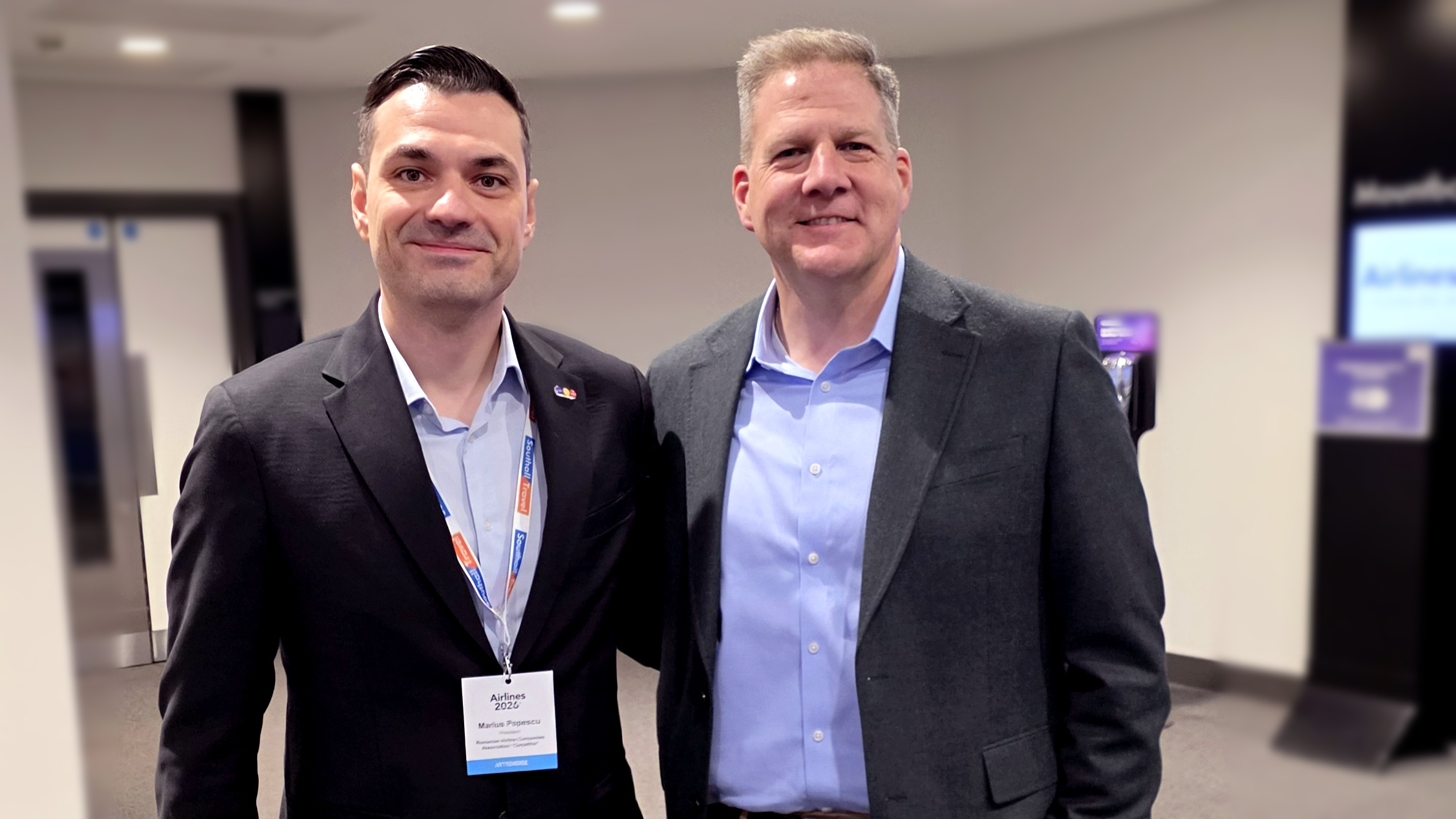
Marius Popescu and Christopher T. Sununu, CEO of Airlines for America, at Airlines 2026.
The sustainability transition needs funding and practical solutions
Ourania Georgoutsakou supported the goal of net zero by 2050 but called for a realistic discussion about funding. She cited an estimated additional cost of decarbonising European aviation, including the UK, of €1.3 trillion by 2050, which airlines and passengers cannot bear alone.
In 2025, she explained, support for sustainable aviation fuels (SAF) amounted to the equivalent of just 11% of aviation’s payments into the EU Emissions Trading System (ETS). The European Commission proposal under negotiation at the time would raise that proportion to only 13%. Ourania called for ETS revenues to finance a much greater share of the sector’s transition.
Her message on SAF was concrete: mandates and penalties alone do not create a functioning market. Investment in production, mechanisms that provide investors with revenue certainty and workable timelines are needed. The objective is to reduce emissions while keeping flying affordable and maintaining connectivity.
International experience in support of Romanian aviation
Participation in Airlines 2026 helps strengthen RACA’s role as an industry interlocutor and develop its capacity to represent the sector. Direct contact with industry leaders and learning from the experience of similar associations provide useful reference points for dialogue with national and European institutions.
The value of this participation lies in how the experience gained can be put to use in Romania: through well-founded proposals, cooperation between companies and institutions, and more effective support for air connectivity. RACA will continue to develop these professional relationships and bring relevant perspectives from the international industry into the national debate.
RACA promotes a competitive, connected and sustainable aviation sector in Romania, for the benefit of passengers and the national economy.
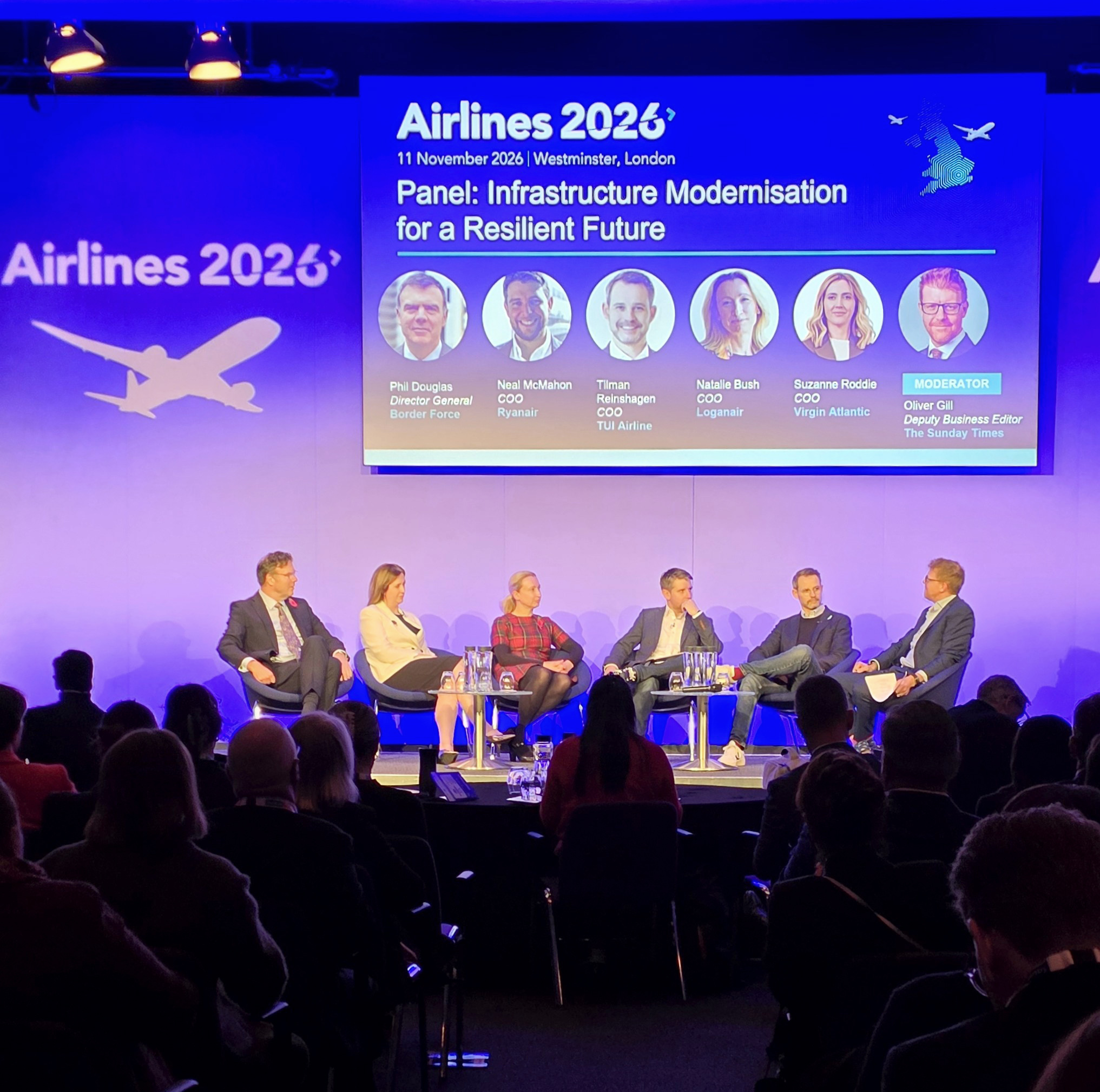
A discussion on modernising infrastructure and strengthening aviation resilience, with representatives of Border Force, Ryanair, TUI, Virgin Atlantic and Loganair.
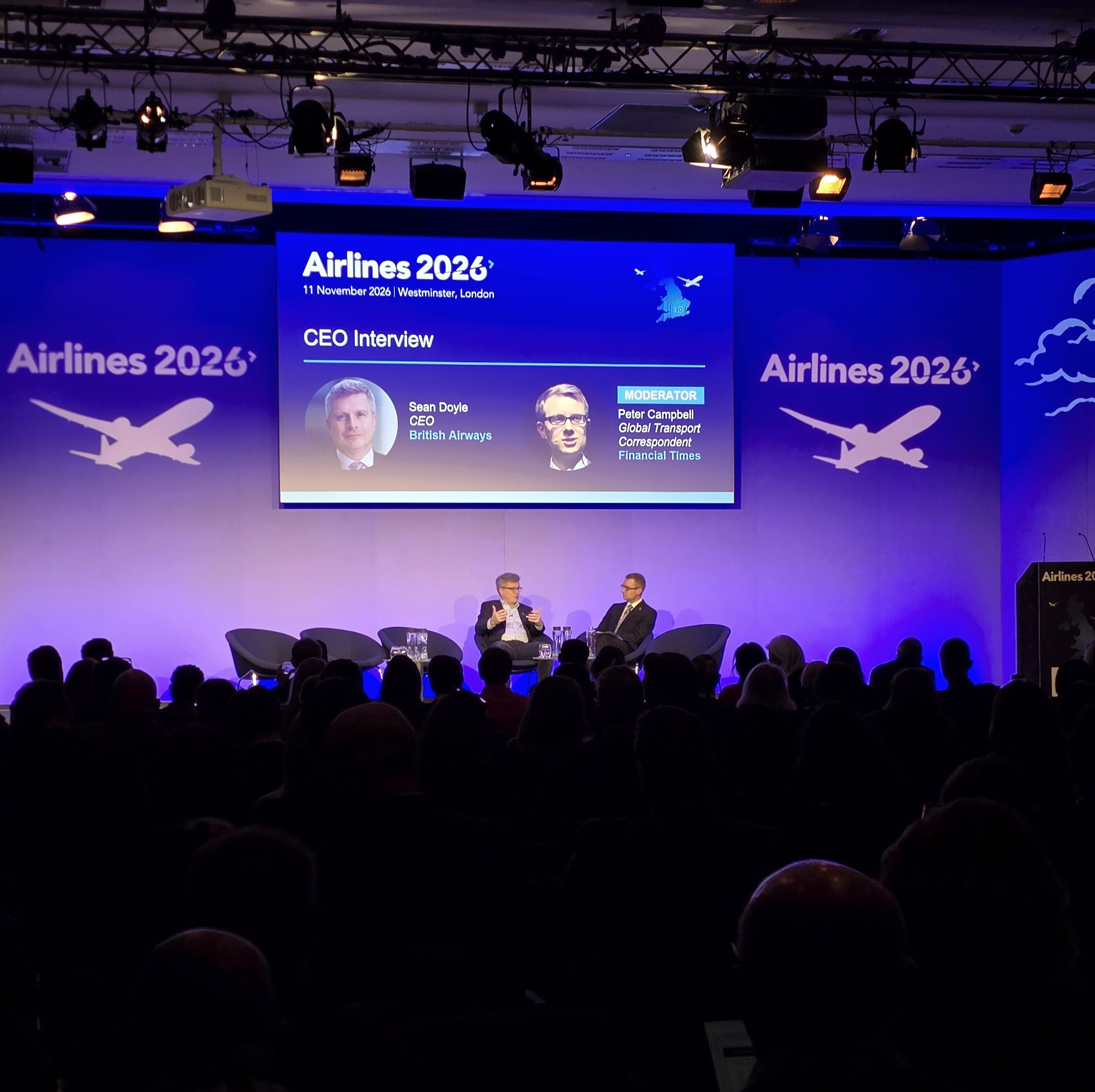
Sean Doyle, Chair and CEO of British Airways, at Airlines 2026.
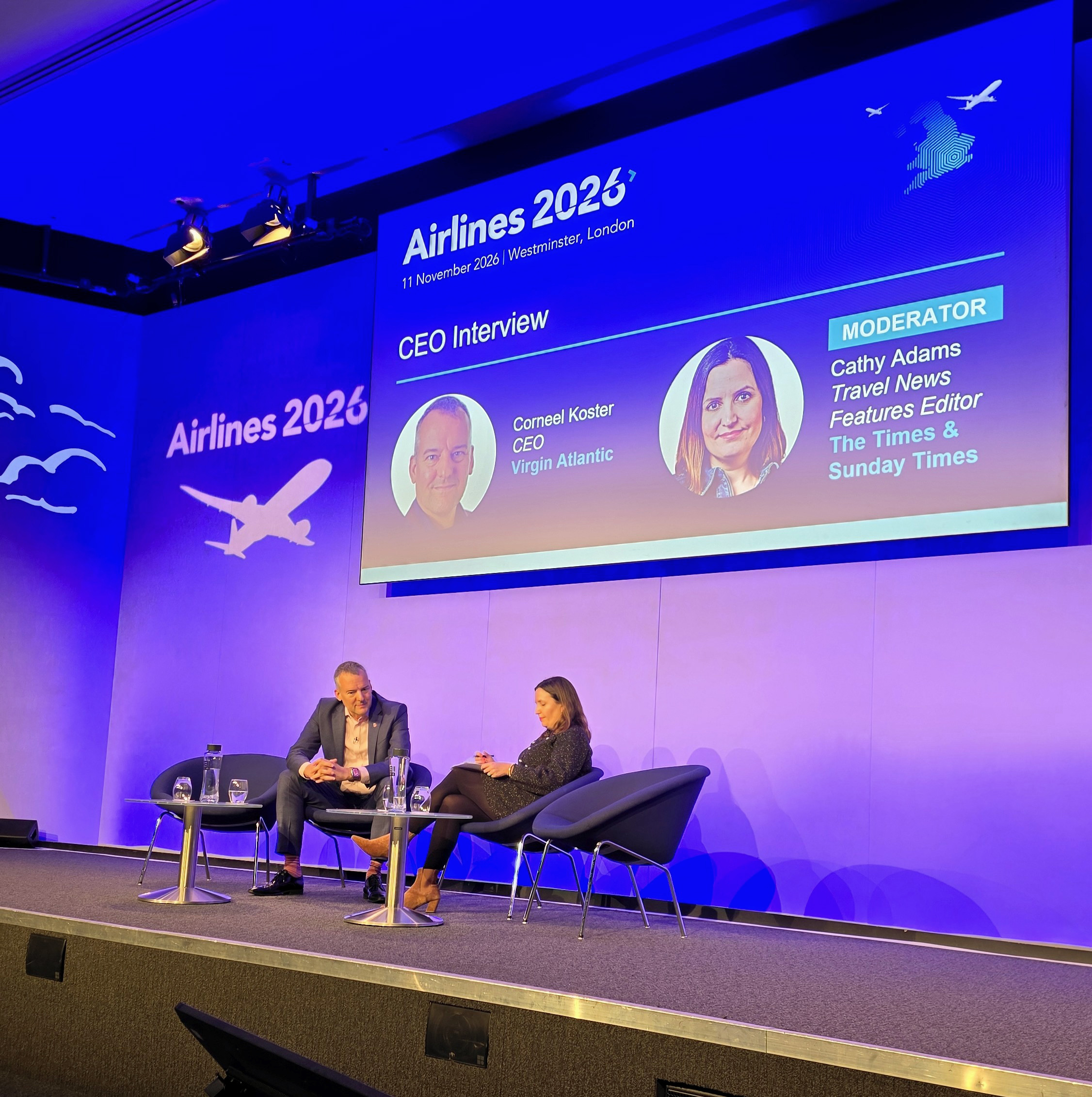
Corneel Koster, CEO of Virgin Atlantic, at Airlines 2026.